Homer's Odyssey
A VISIT TO KING NESTOR
“How can I greet him, Mentor, even approach the king? I’m hardly adept at subtle conversation.”
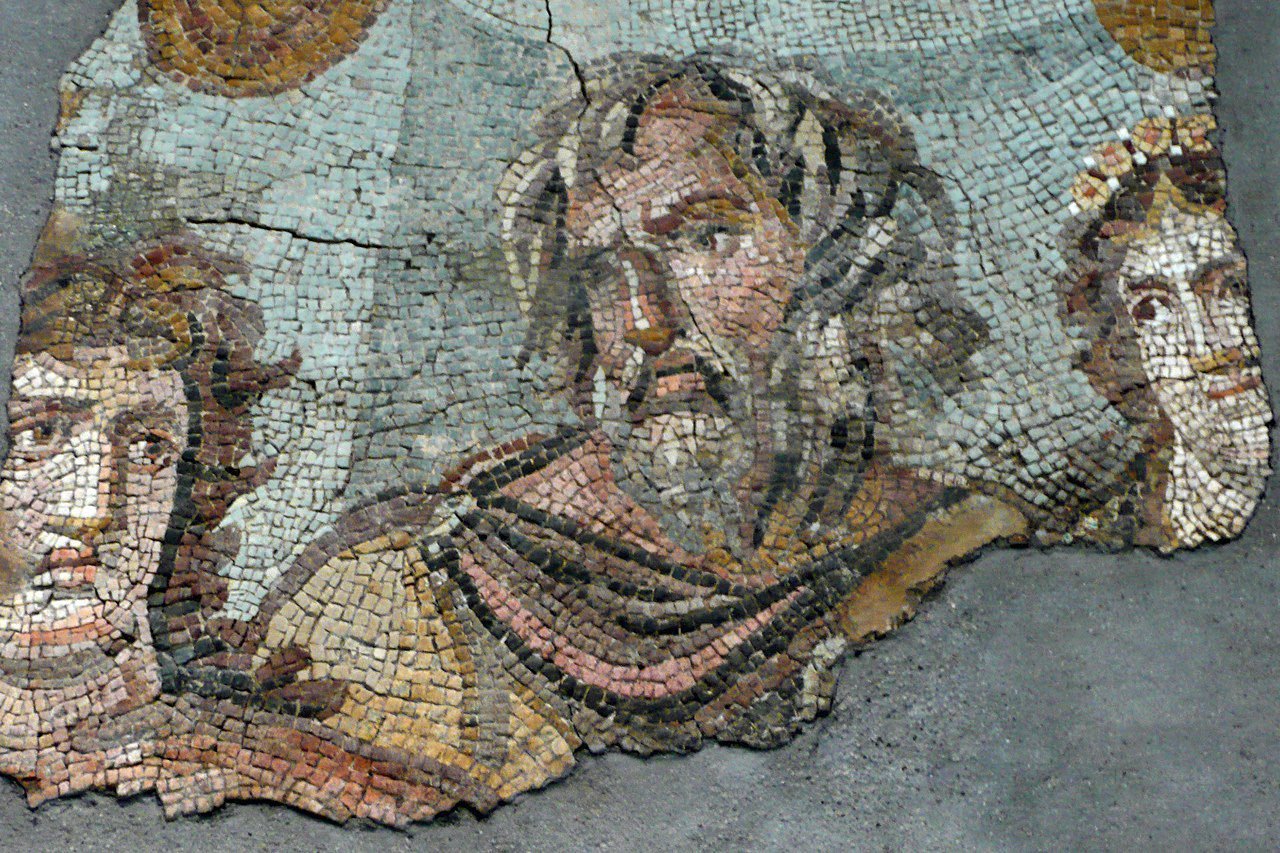
Art: Mosaic with the Removal of Briseis (Illiad, Bk 1, l. 409-415) - Roman (2nd C AD), with Nestor at the center, @GettyMuseum, Los Angeles.
“How can I greet him, Mentor, even approach the king? I’m hardly adept at subtle conversation,” asks Telemachus.
Athena reassures him that some words will be his and others will come from divine inspiration.
King Nestor and his son, Pisistratus, extend hospitality to their guests. Only after the custom has been observed does Nestor asks questions. That’s when Athena fills Telemachus’s heart with the courage to ask news of his father.
What follows is a powerful moment, filled with memories.
Nestor recalls the massacre at Troy, where he lost many comrades at arms, including Achilles, Patroclus, Antilochus, and more. (You can read more about the battles in Homer’s Iliad.) The suffering was so great that Nestor cannot put it into words.
He recounts Odysseus’s feats in battle: how he outdid all the other Greeks in cunning. Like Mentor, he recognizes Telemachus as Odysseus’s son. He specifically mentions Telemachus’s “way with words,” an indication that Athena is now inspiring Telemachus, as she often inspired his father in the past.
Nestor recalls Athena’s wrath—a wildly dramatic moment since the goddess, still in disguise, stands right in front of him now. (Her anger was due to the unruly behavior of the Greek army. Ajax the lesser attacked Cassandra and desecrated Athena’s temple. Agamemnon delayed his return journey in order to make offerings to Athena in the hopes of appeasing her. But we all know what happened next.)
Did you notice that Nestor mentions that he made sacrifices to Poseidon, the sea god—the very same god the narrator tells us (in Book 1) is angry at Odysseus? In fact, Book 3 also opened with feasts in honor of Poseidon. By securing Nestor’s help and wisdom, does Athena hope to appease Poseidon’s anger against Odysseus?
We hear about Agamemnon’s murder again as well. This time, Telemachus declares that he wishes he might become as famous as Orestes, by having the courage and divine strength to slaughter all of the suitors that assail his home. In the face of such injustice, Nestor wishes for Telemachus that a great god or goddess, like Pallas Athena who so often favored his father, might bestow favor upon the young man. I’ve always wondered if Nestor is testing the ground here, suspicious that Mentor is a god in disguise. (If so, what dramatic subtext!) It’s possible. This comment from Nestor occurs right at the midpoint of Book 3.
When Telemachus fears for his father’s death, Athena rebukes him for his lack of hope and faith—not only in his father, but in her. She reminds him that no god can intervene when Fate / the Fates hold sway. Death is “the great leveler” that comes for us all.
But Telemachus wants to hear all the details of how Agamemnon met his death. If there’s a lesson in Agamemnon’s story, Nestor warns Telemachus, it is to not stay away from home for too long, and to get back, before the suitors wreak even more havoc.
Notice Athena’s patience here. She does not reveal herself yet, but commends Nestor on a tale well-told.
That’s when it happens. After announcing that s/he will go down to the ship and watch over it and the men as Telemachus sleeps, Athena reveals herself, to the amazement of all. Right in front of their eyes, she transforms into an eagle and soars away.
Nestor tells Telemachus to take heart: Athena is with him. The King prays to the goddess devoutly.
The next morning, Nestor once again models devotion to the goddess by arranging sacrifices in Athena’s honor. Only then does he send his son and fresh horses to lead Telemachus on to Sparta.
No wonder Athena brought him to Nestor: he exemplifies what it means to honors the gods.
-
Read the Odyssey online in the translation by Robert Fagles, or order the paperback.
Learn more about the longstanding controversies and theories about who Homer may, and may not, have been.
Disclaimer: As an Amazon Associate, we earn from qualifying purchases. Amazon and the Amazon logo are trademarks of Amazon.com, Inc. or its affiliates.