The Boethius Project
Consolation of Philosophy, V
Is there room, then, for chance? If divine providence rules all things, then what of free will? What of Fate? Is our future predetermined, or are we capable of making our own choices? Lady Philosophy leaves us with an entirely new vision compared to the outlook the prisoner shared in Book I, and prepares him for whatever comes next. Did Boethius intend to finish here, or write more? We’ll never know. These are his final words.
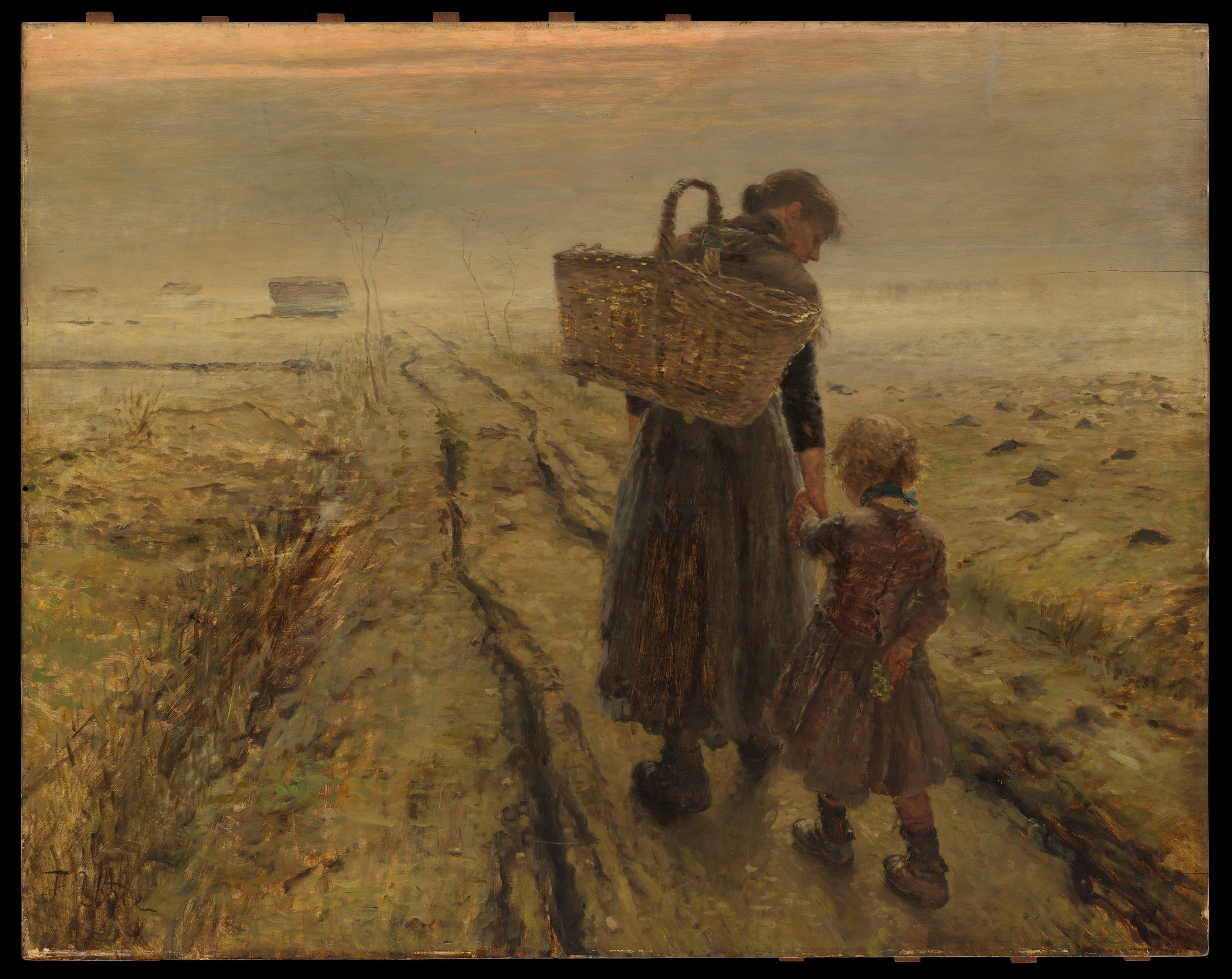
Going Home by Fritz von Uhde from the Met Museum
-
What about chance?
Boethius then asks Lady Philosophy if chance has any place within the rhythm of Providence and Fate. She replies that things appear to be chance from our very limited view but when considered within the overall plan are not chance at all.
She gives the example of a man who digs in his field to plant something but discovers a sack of gold. He did not intend to find a sack of gold. The one who buried the sack of gold did not intend for it to be found by another. It appears to be pure chance that the man happened to dig in just the right spot so as to find the sack of gold.
But in the greater workings of the universe, Lady Philosophy reminds Boethius, there is more at work. There are causes that move beyond our understanding and so their results appear as chance. And so it is only from our perspective, that chance is “the unexpected result of causes that come together of things that were done for some other purpose.” From the perspective of Providence, these aren’t coincidences.
There are echoes of Jesus’s parable in Matthew 13 where he likens the kingdom of Heaven to a man who finds treasure in a field and sells all he has to buy the field. Sometimes the very things that appear to us as chance are the impetus for us to make the change or shift we couldn’t have imagined for ourselves. And from this change, we are invited closer to our calling. If we have the eyes to see and ears to hear the invitation within. (by Courtney Becker & SJ Murray)
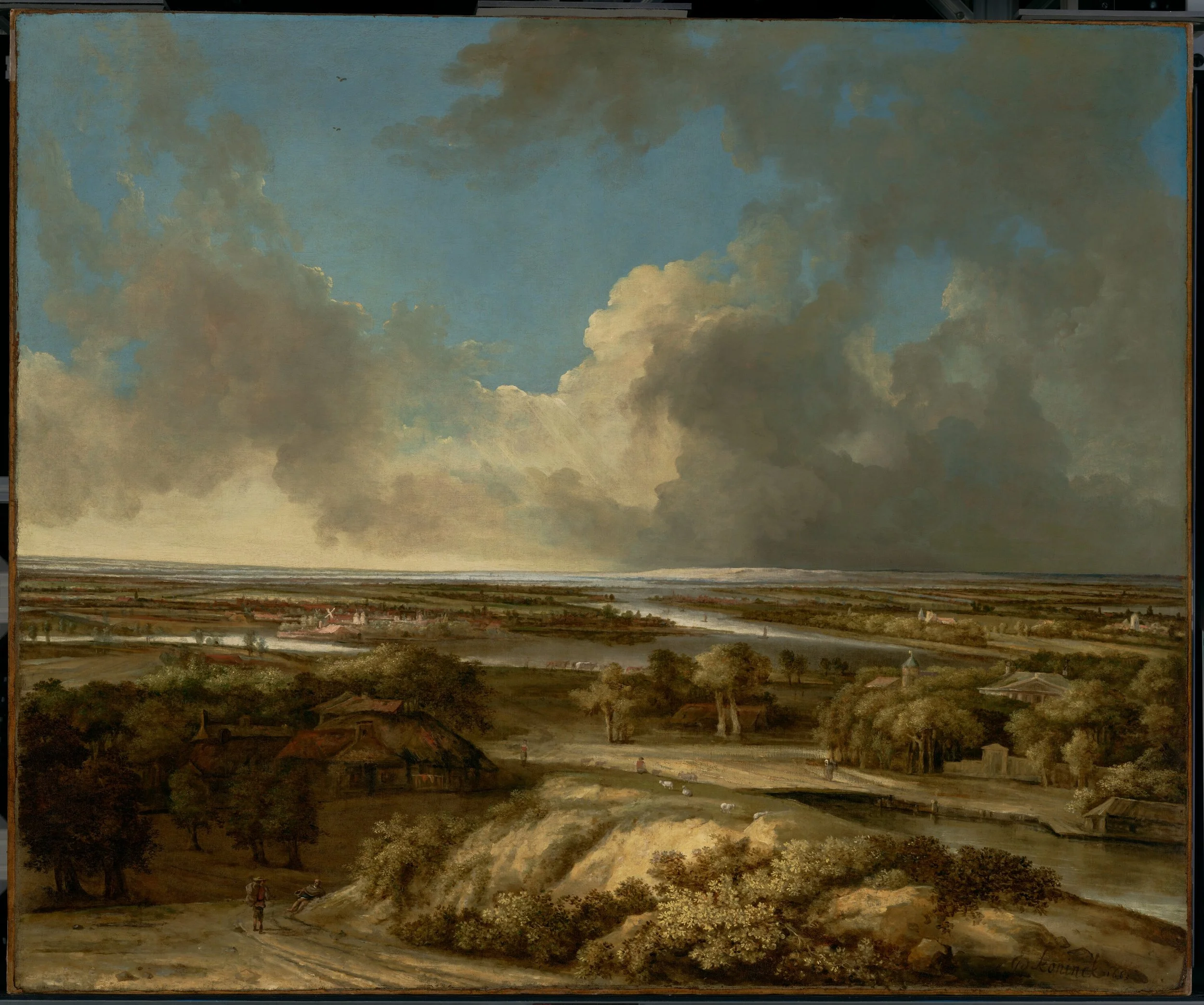
A Panoramic Landscape by Philips Koninck from the Getty Museum
-
Rivers of chance.
Two rivers diverge and then merge again later down their path. Random items picked up in the waters along the way come together as the rivers merge. But is it truly random?
Lady Philosophy explains that rivers seem to lend themselves to chance. They flow along and pick up whatever happens to be nearby. They flood their banks and drag in random items. And then all these things get thrown around in the currents until the rivers combine and throw their loads together.
However, the path and journey of these rivers is anything but chance. The basic principles of gravity and the natural topography of the landscape all dictate where the river will go and what it will do. These factors, amongst others, will determine the flow of the water and its behavior. What appears to be a perfect setting for chance has more order than appears on the surface.
So too, with our fate and the world around us. Chance, though it seems prevalent, is not truly random. What we see is that “slack-reined chance could be shown in the end to be wearing its own bridle of laws that all along governed its every movement.” What appears to us as chance happenings are truly governed by a higher and greater power. And this power is intentional. (by Courtney Becker & SJ Murray)
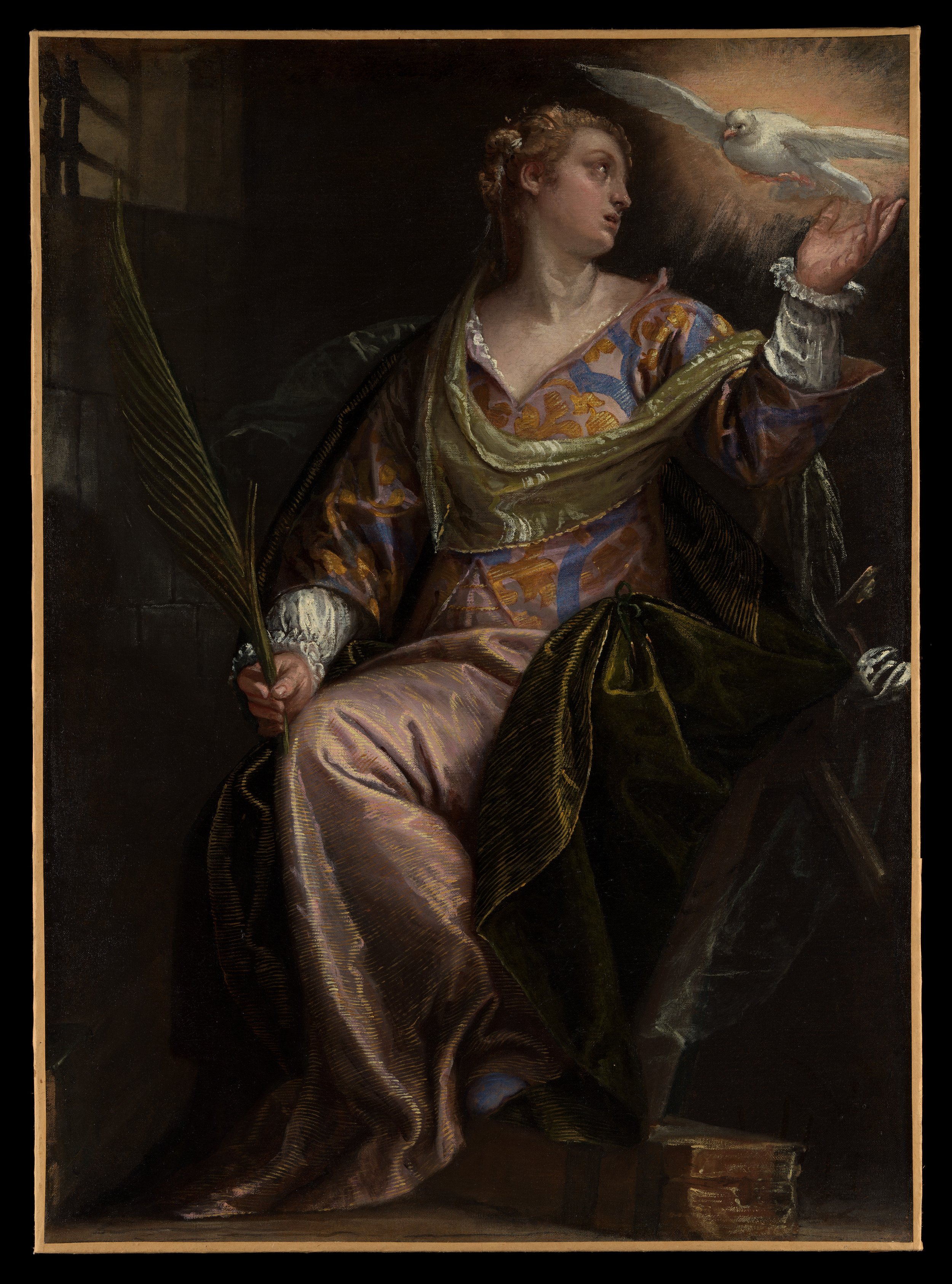
Saint Catherine of Alexandria in Prison by Paolo Veronese (Paolo Caliari) from the Met Museum
-
Free Will.
Boethius is confused and asks how can we have free will if chance is non-existent? Lady Philosophy affirms our free will, making the case that if our wills are restrained, we can’t judge between the desirable and undesirable things of this world. But there is a gradient to this freedom, as not all can will what is desirable.
Here, Lady Philosophy turns our attention to the qualities of a truly free will. The closer we grow to the mind of God and the more aligned we are with His will, the freer we are. However, when we turn from the contemplation of God, she says, we become “entirely imprisoned in earthly flesh and blood.” As we stray further from reason, our wills become ensnared in vice. When our eyes are lowered from the Creator and instead focus on creation as the provider of true happiness, we become wrapped in “a cloud of ignorance.” Reason and the contemplation of God free us from this bondage to vice. Therefore, reason is the most critical component of free will.
Lady Philosophy reminds us that providence is always watching, giving both punishment and reward according to the actions of each person. The contemplation of God strengthens us with the free will to follow the good and avoid what is evil. (by Joshua Beuker, ed. SJ Murray
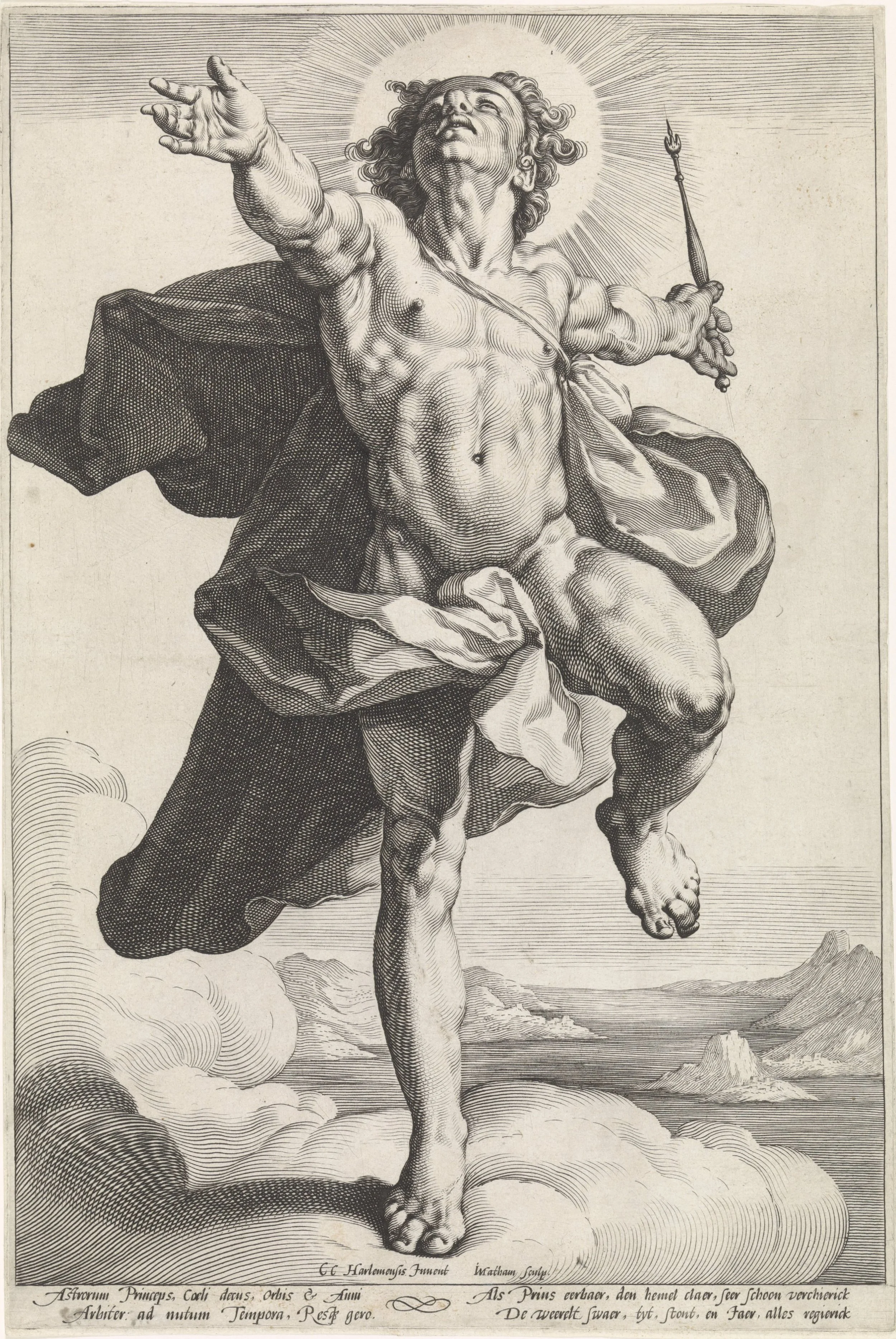
Apollo als Helio, print made by Jacob Matham after design by Cornelis Cornelisz from Rijksmuseum
-
True sight.
God’s sight is far reaching, able to see all things.
Lady Philosophy cites Homer, as he writes that Phoebus Apollo’s light “sees all things and hears all things.” But Lady Philosophy retorts that this is not the case. The light of the Greek deity cannot pierce the “inmost depths of earth and sea.” But God’s sight is over and above the sight of all earthly beings. His sight is unobstructed, capable of seeing all things created. In fact, Lady Philosophy emphasizes this distinction by calling God the “great Creator,” thereby drawing our attention to the source of all things and God’s eminence over the created realm.
There is another aspect of God’s vision which Lady Philosophy encourages us to recognize; God’s sight is timeless, “he sees what is, what was, and what is to come in an instant’s insight.” The Creator is not constrained by our mortal temporality and our limited view as created beings.
Lady Philosophy wants us to recognize that we are always under the watchful gaze of that which is the source of all things. No created being has the same scope as God, because he, as the Creator, is not constrained by space or time, transcending both with his gaze. Referencing back to Phoebus, God is the “true and only sun,” and we must act fully aware of and acknowledging the infinite vision of God. (by Joshua Beuker, ed. SJ Murray)
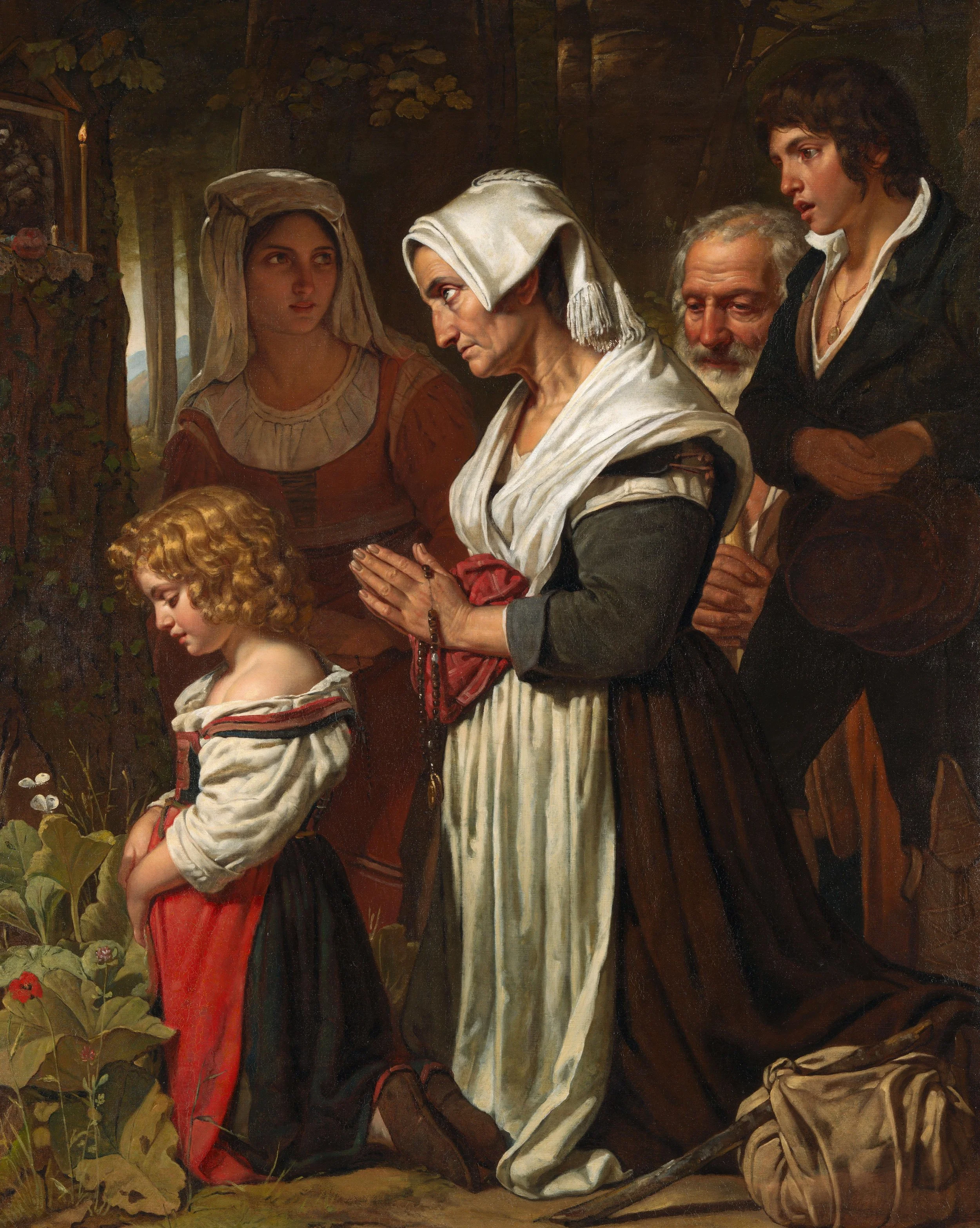
Godsvrucht by Cornelis Kruseman from the Rijksmuseum
-
Why Free Will Matters
Why is it so important that free will exists?
Boethius digs into Lady Philosophy’s argument about free will. He agrees that the more we align with God, the freer we truly are. But it’s still unclear exactly how free will works with Providence. If God foresees everything, then can free will exist?
The implications of this question are essential for truly understanding Lady Philosophy’s argument up to now. If free will does exist, then what she has explained about how wicked people are punished for their actions while good people are rewarded for their good choices makes sense. It can truly console Boethius as he bears out his woeful fate at the hands of wicked people.
But, if free will does not exist, then “there are no virtues and no vices anymore, but only a jumble of rewards and punishments of merits and faults that cannot be distinguished from one another.” Our choices and actions no longer matter. We instead live in a pernicious and unloving world where punishment and reward are dealt out without rhyme or reason. And indeed the very foundation for our relationship with God would be destroyed. Prayer would be pointless because it wouldn’t affect anything and there wouldn’t be a relationship with an all good God.
Boethius knows this cannot be the case, but he can’t fathom how our free will exists alongside God’s Providence. How can we make free choices if God has knowledge about everything that will ever happen? Lady Philosophy will soon apply the needed medicine to soothe this concern. (by Courtney Becker, ed. SJ Murray)
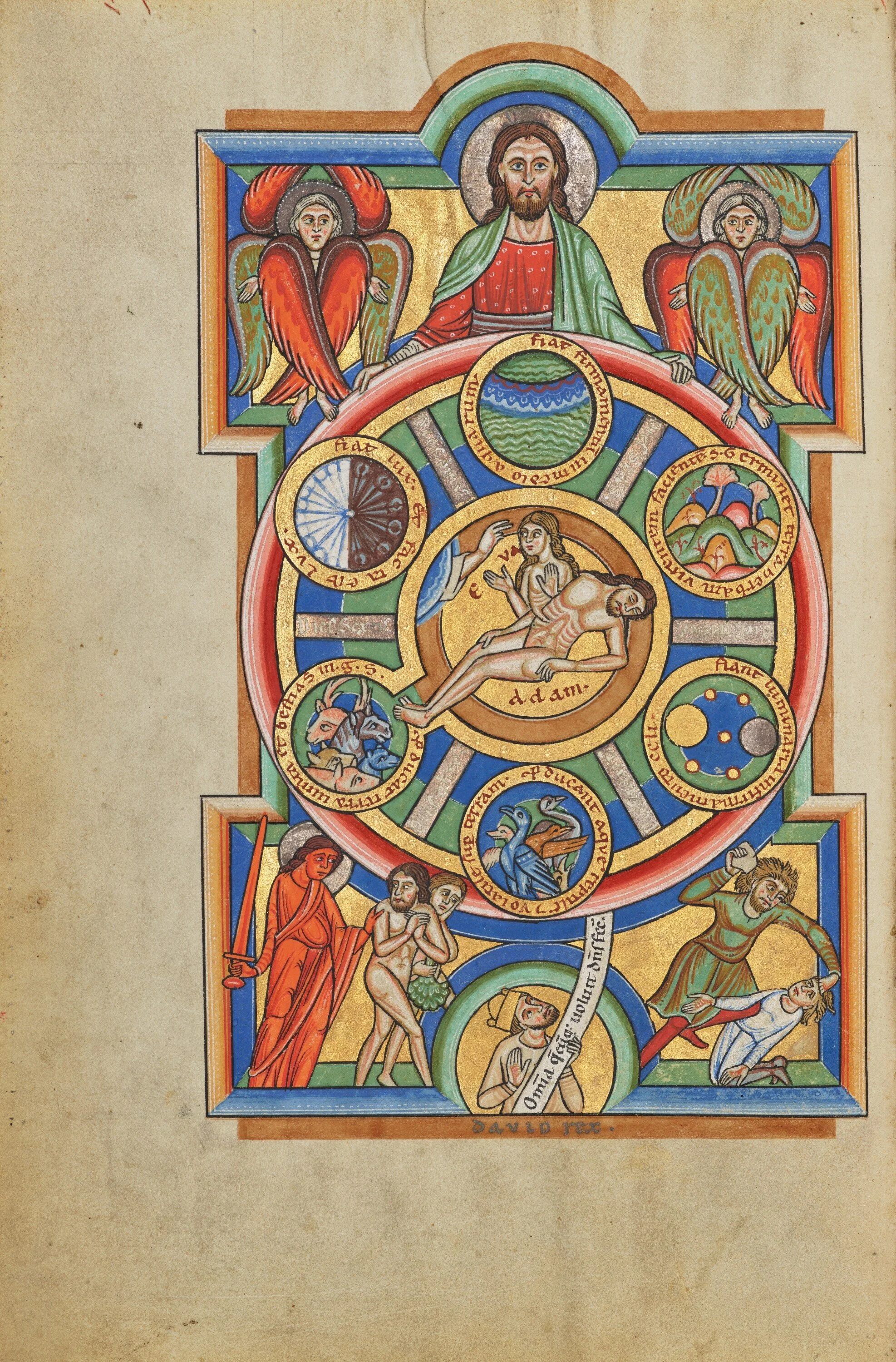
The Creation of the World, Ms. 64 (97.MG.21), fol. 10v from The Getty Museum
-
The Greatest Truth
In the midst of his confusion about how free will and Providence can coexist, Boethius makes a remarkable declaration of trust and faith. He proclaims that even when the truth seems obscured or the answer paradoxical, there is an even greater truth undergirding it all. As we contemplate the great questions about the intricate workings of the universe from our limited perspective, “we feel the warmth of the love that holds together all that there is in eternal truth.”
We are called to question and wonder. We are made to seek out new knowledge. We are gifted with curiosity to keep advancing what we understand. These are good inclinations. They help to draw us ever forward to our purpose and to know the world around us better.
Hand in hand with this innate call to question is also an innate call to trust. We are limited. We are bound by the constraints of space and time. What we see is shrouded in obscurity. No amount of our own cleverness, innovation, and reasoning can overcome these limits. Reason can only take us so far.
When reason fails, we are invited to lean into a greater truth that is impressed upon our very soul. The truth that in the vastness and greatness of all that has been created, we are loved. Love holds everything together, guides all we see, and directs the entire universe. We are uniquely, individually, and wholly loved. And this can give us the confidence to not only ask the big questions but to lean into faith when we reach the limits of our reason. For the truth can withstand our probing. And by always seeking this truth, we discover who we are made to be in the process. (by Courtney Becker, ed. SJ Murray)
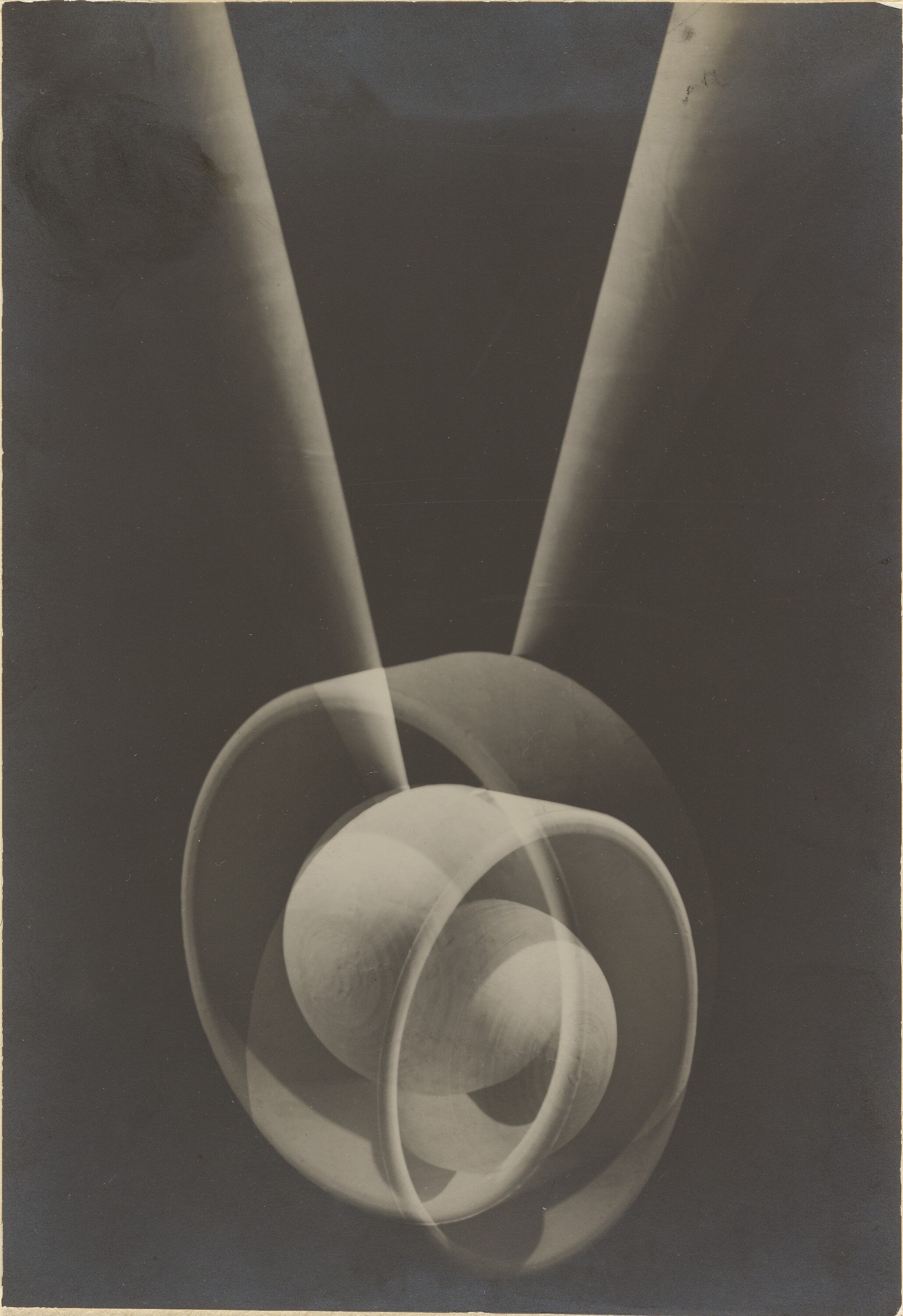
Abstract Shapes by Hannes Maria Flach from The Getty Museum
-
Seeing the whole.
Lady Philosophy takes Boethius’s objections in stride. She asserts that the flaw in his reasoning is the presumption that foreknowledge of events imposes a necessity on them that renders free will void. Just because God has knowledge of future events that have not happened in our limited perception of the world, does not mean that free will doesn’t exist.
She invites Boethius to consider how there are many different ways to perceive an object, such as a sphere. If it’s seen from far away, more of the entire shape can be seen at once. But from that great distance, it can’t be touched and so that sensory information is lacking. If you are right next to the sphere, you can touch it and feel it. However, you can’t see as much of the sphere all at once as you could from a great distance away. We naturally have different ways of encountering the world and perceiving it.
Lady Philosophy introduces levels of perception that build upon each other: sense, imagination, reason, and intuitive intelligence. Each level takes in new information and builds upon the former levels. We can only go so far as reason in our limited view. God alone has intuitive intelligence. And because of this, He perceives more of reality than we ever could. “The intuitive intelligence, however, as if it were looking down from a lofty vantage point, perceives the universal form and distinguishes all things that partake of it—but in a way that allows it to understand the form itself, which cannot be known in any other way.”
He sees to the very core and truth of all things. He knows us and the world more deeply, intimately, and wholly than we ever can. (by Courtney Becker, ed. SJ Murray)
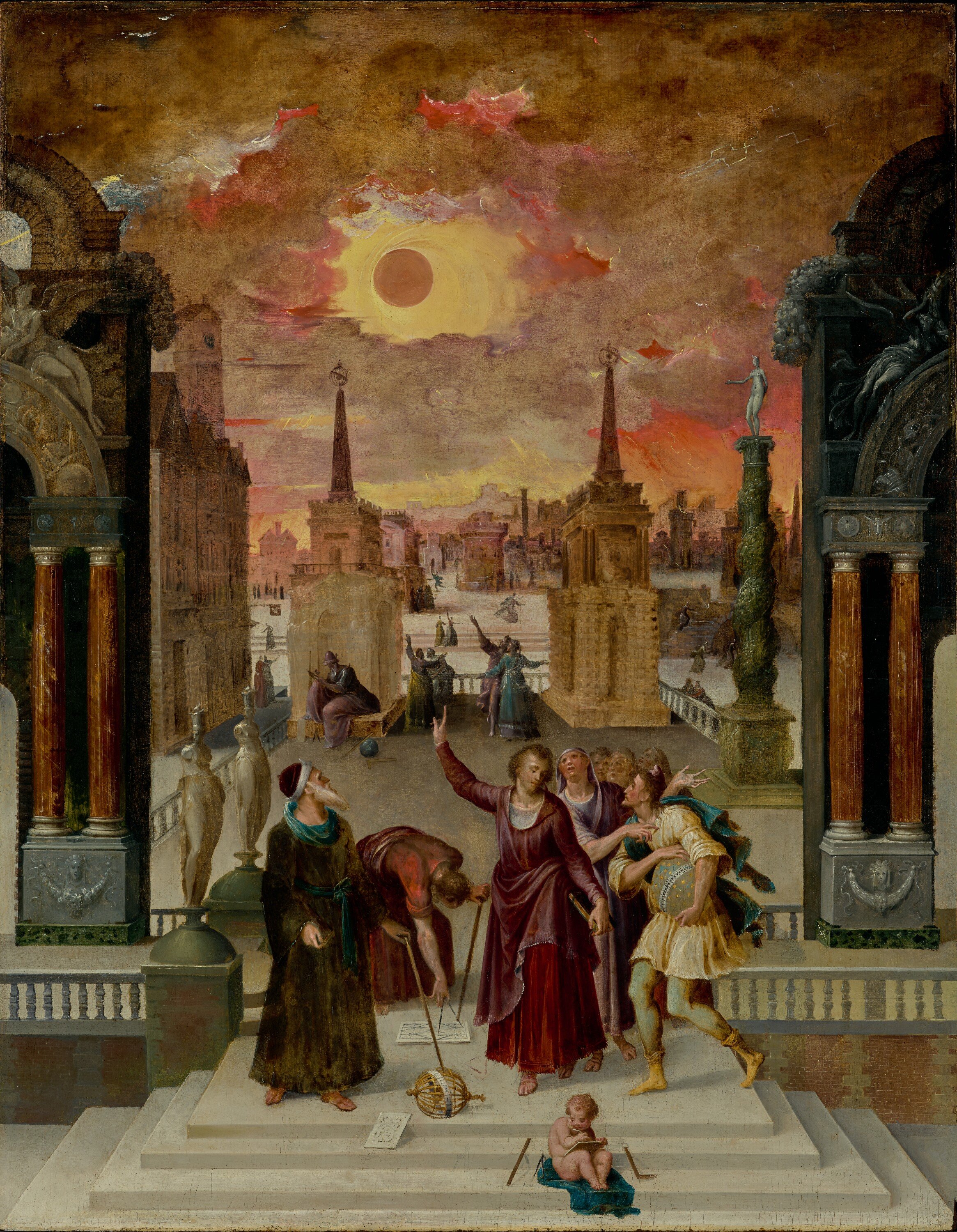
Dionysius the Areopagite Converting the Pagan Philosophers by Antoine Caron from The Getty Museum
-
A forceful mind.
The mind is truly wondrous. Though we are limited in what we can perceive, nonetheless we have been gifted a remarkable ability to reason, imagine, debate, understand, and create. And there is so much we still don’t know about how the mind works.
To help drive home her point about our own limits, Lady Philosophy delves into the wonders of the minds we have been given. They do not possess the intuitive intelligence reserved for God alone. But our minds are capable of a great deal. And since the ancient philosophers, we have been curious about how we think and perceive. How our minds work still fascinates us today.
How do we take in the stimuli we encounter? How does our brain retain falsehoods and truths and, at times, confuse the two? How do we contemplate the highest heavens that we’ll never be able to reach but still marvel at?
While our mind is, in many ways, limited, here Boethius and Lady Philosophy remind us that it is also “forceful […] and active.” And it is the gift of this forceful intellect that we are called to use in just the manner Boethius does throughout the Consolation. To take in the world around us, wrestle with what we cannot perceive, and reach the limits of reason. At that point, we are called to faith and trust. (by Courtney Becker, ed. SJ Murray)
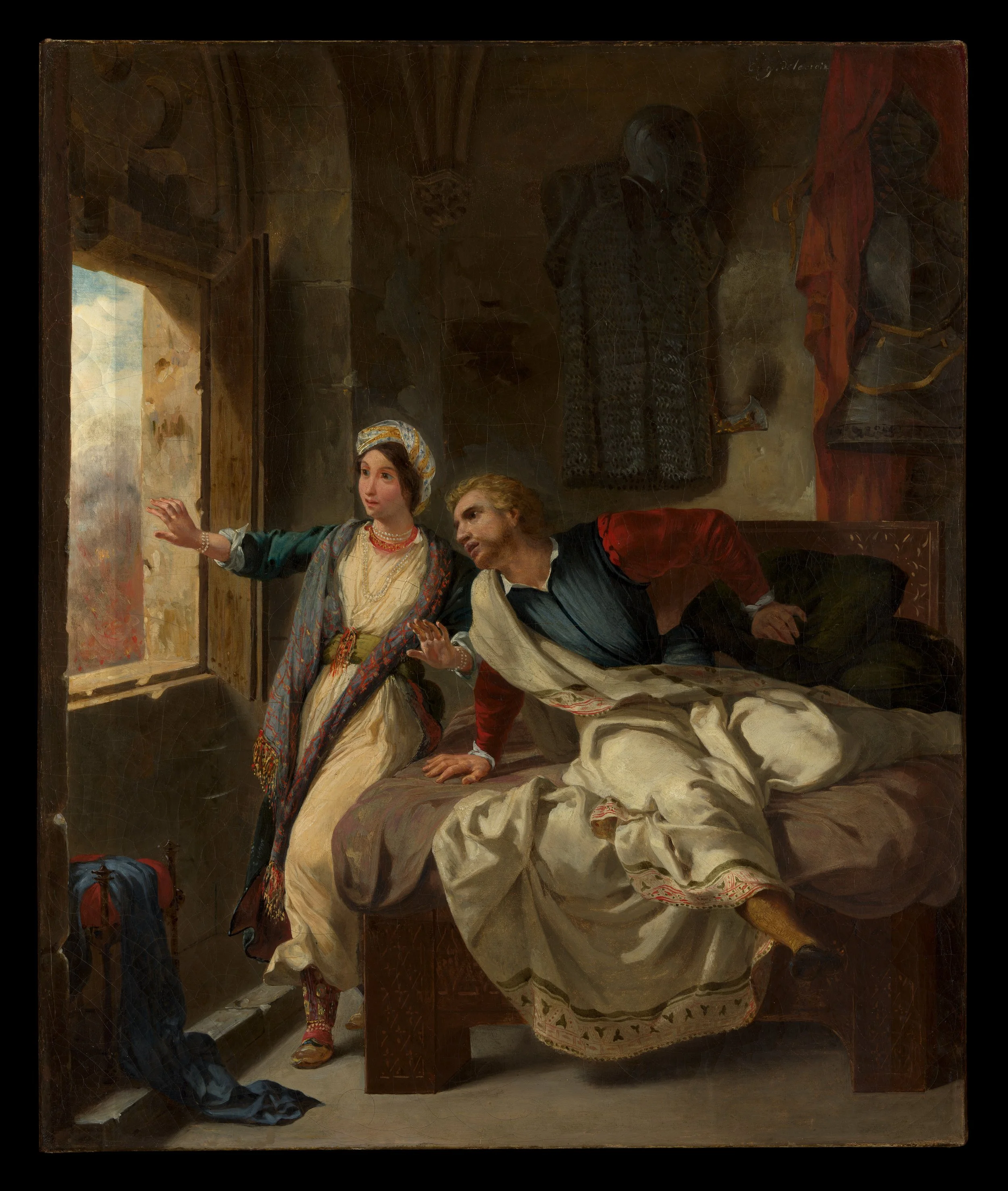
Rebecca and the Wounded Ivanhoe by Eugène Delacroix from the Met Museum
-
The Gradient of Understanding
All creatures possess various kinds of knowledge, but they are not as all-knowing as the divine. Lady Philosophy paints an image for the reader of oysters and clams, who merely perceive the world through sense perception. However, they lack imagination, which predators and other creatures do. Then she arrives at classifying humans. “Reason belongs only to humans.” Humans possess a more critical form of judgment in the form of reason and therefore can critically engage with the world and the divine in a way that other living creatures are unable.
Finally, Lady Philosophy arrives at classifying God’s knowledge. “Intuitive intellect belongs only to the mind of God… this last is the highest form of knowledge, for its scope includes that of all the others and goes beyond them.” The scope of God’s knowledge is far-reaching, perceiving and understanding things in their entirety. Compared to a human, whose knowledge is limited in scope, Lady Philosophy paints a picture of the divine understanding as being infinitely large in scope.
Following this layout of knowledge, Lady Philosophy implores Boethius to remember the nature of created beings and their limited understanding. Recalling their conversation about the complications regarding free will and divine providence, Lady Philosophy comforts Boethius by saying, “Human reason cannot understand how divine intelligence can see future events except in the same way that humans see them.” Lady Philosophy wants Boethius to see that human reason is inherently limited. We can only understand the world from the perspective that we have. It is necessary, in her view, to find comfort in the all-encompassing sight of God and not rely on our own limited understanding. (by JoshuaBeuker, ed. SJ Murray)
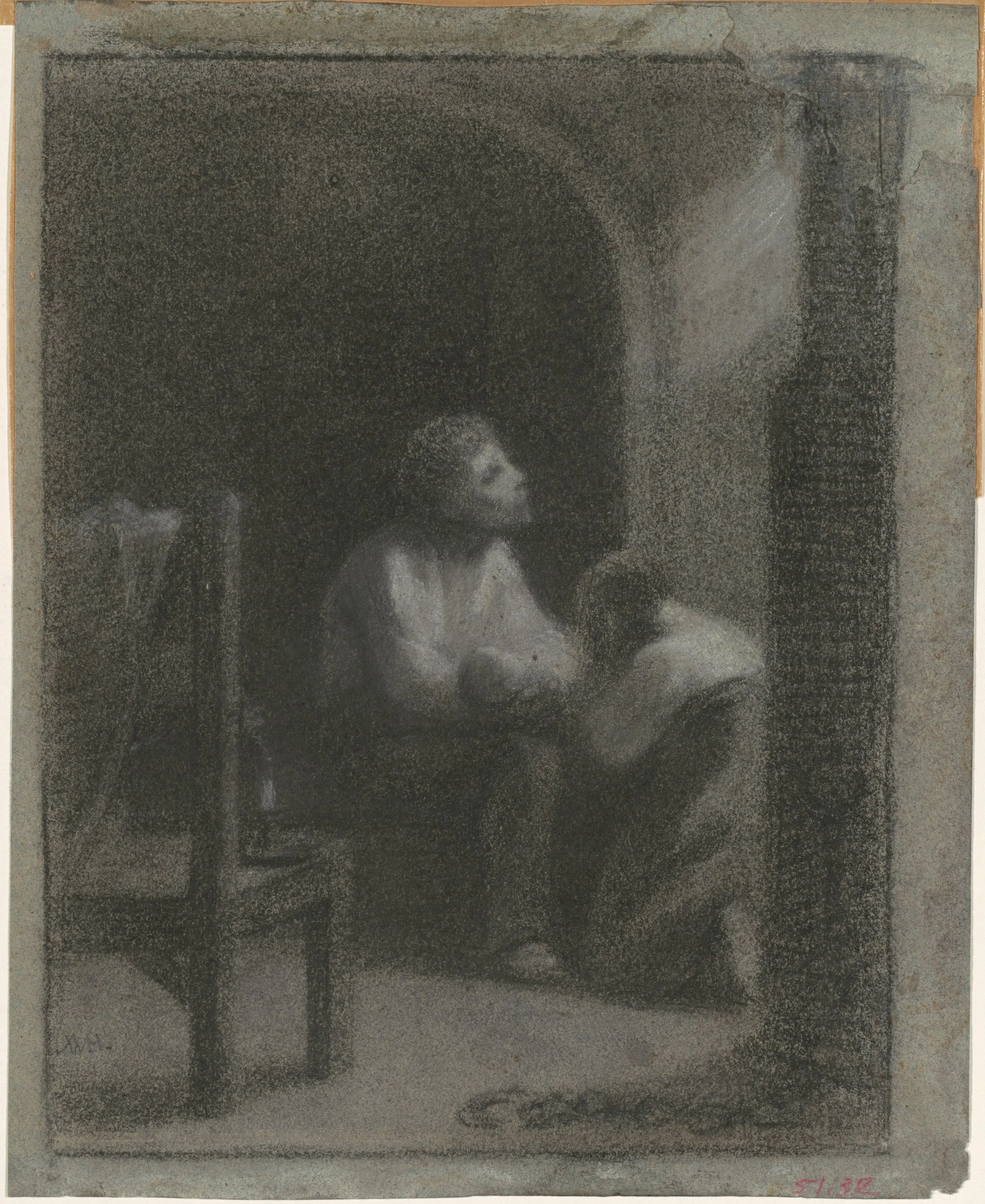
The Prayer by William Morris Hunt from the National Gallery of Art
-
Called to Look Up
We are made to look up and “gaze at heaven.” Other creatures are made to move through the world through flying, swimming, crawling, always looking down. But human beings alone are made with the distinct purpose of turning toward God.
Along the way, we get distracted by lesser goods. We chase pleasure, power, honor, wealth, and fame, thinking these will satisfy the innate yearning we experience. And yet, each of these are empty. If we place our hopes in them, then, like Boethius in the beginning of the Consolation, we can be tempted to despair.
Lady Philosophy has offered the perfect antidote for Boethius’s pain and sorrow. She has invigorated his mind so that it can once more “soar high, free of the earth’s mire.” And, through this, Boethius can find his way home. In the midst of physical imprisonment, his mind and spirit have been set free. So too, we are called to hone and use the gifts we have been given. For we have been made for more than this world. We have been made to look up. And it is in stepping fully into this role that we can find true peace. (by Joshua Beuker and Courtney Becker, ed. SJ Murray)
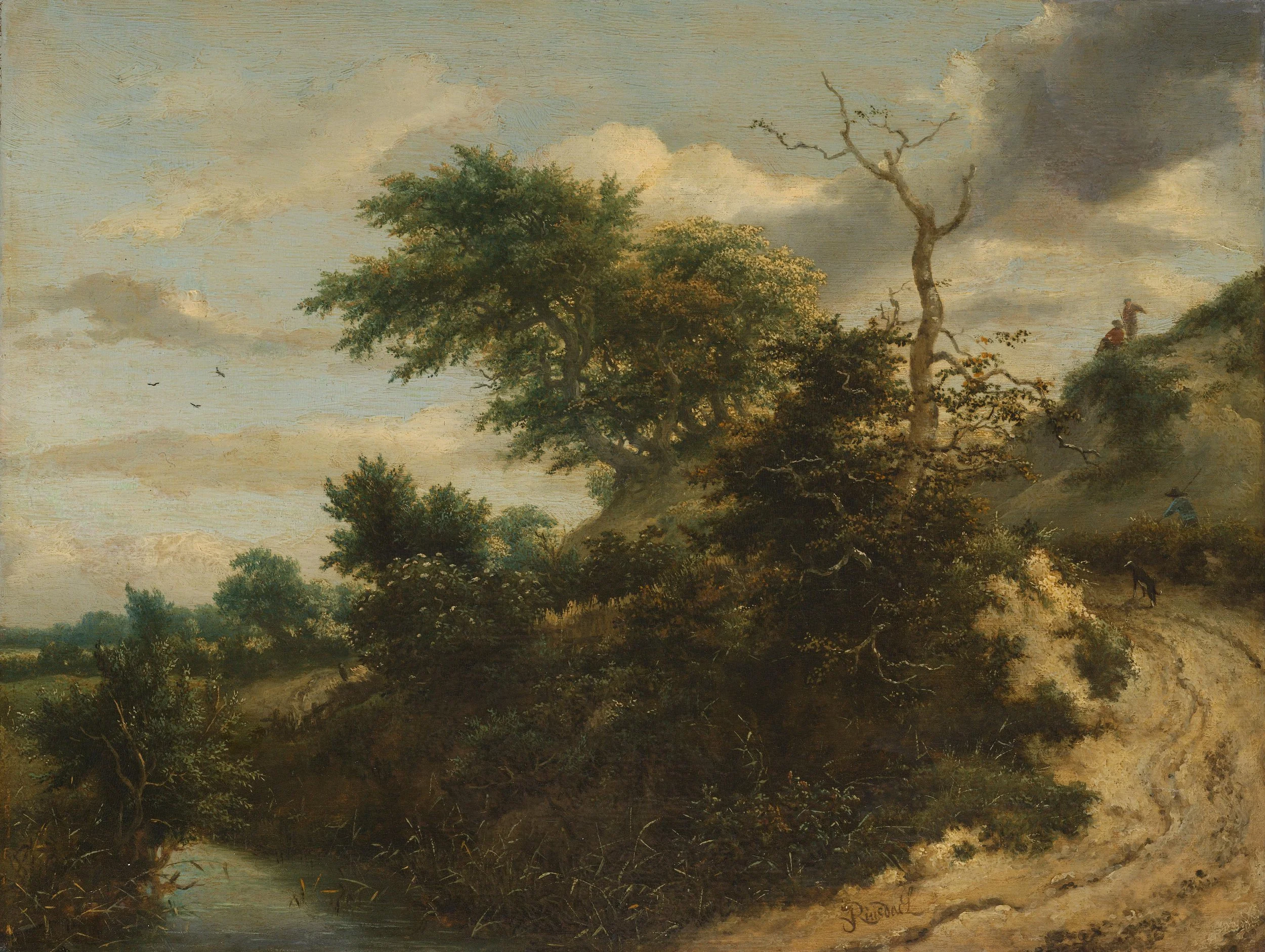
Sandy Track in the Dunes by Jacob Isaacksz van Ruisdael from the Rijksmuseum
-
The Present Moment
Lady Philosophy explains that free will and Providence are not at odds. Because God is eternal, he sees all of time in an eternal present. For us, we live only in the present. We have a past that we cannot return to and anticipate a future we do not know. Our choices and actions happen in our current present moment.
And this distinction gives us insight into the great gift we have been given. We have the chance to exercise our free will. We can learn from and reminisce about the past. We can anticipate and plan for the future. But ultimately we only have the moment we are living in right now. We choose who we want to be in this moment. Each of our choices carries weight. Our choices shape who we are and what will happen in the future. We choose to cultivate virtues or to succumb to vices.
Lady Philosophy is clear. “Do not be deceived. It is required of you that you do good and that you remember that you live in the constant sight of a judge who sees all things.”
We are called to steward the time we have been given well. To use our free will to align our hearts with the ultimate source of the good and therein find true happiness. And all of this happens in this exact moment.
As Boethius has discovered, this is the key. We must use the wisdom we have learned from our past, lean into the hope we have for the future, and be intentional in the present moment. And each step of the way, God is there with us. He never abandons us or leaves us. He simply invites us to be present with Him as we journey on. And what we decide to do with that invitation makes all the difference. (Courtney Becker, ed. SJ Murray)