Antigone
Discover Sophocles’ epic play, Antigone, with Dr. SJ Murray. Below, you’ll find links to daily readings and reflections to guide you through the tragedy. Resources are free and it’s a wonderful opportunity to read in community. You’ll also find lessons on SJ’s socials, where you can ask her questions.
-
Antigone by Sophocles is an epic and tragic clash between family duty/divine law, and the flawed law of state, instituted by a tyrannical ruler. Antigone is one of the fiercest and boldest figures in all of Greek theatre (and literature). As she defies the decree of her uncle, King Creon, to leave her brother’s body unburied because he fought on the losing side of a bloody civil war, she sets the stage for a conflict of monumental proportion that costs her—and Creon—everything.
Antigone’s defiance is a declaration of loyalty to a higher, moral (divine) law over the corrupt authority of the state, and it’s an unflinching assertion of personal duty in the face of malignant power. When confronted by her sister Ismene, who tries to reason with her, Antigone’s resolve is unwavering. “I will bury him,” she declares, “and if I die for it, I am content to die.”
Her words set the tone for the play, where personal conviction and allegiance to a higher, moral code collides with the cold, calculating power of human law-making. This tragedy unfolds from the clash of two wills—Antigone and Creon—both resolute in their belief that they are right.

Antigone Gives Token Burial to the Body of Her Brother Polynices by Jules-Eugène Lenepveu (ca. 1835-1898) from the Met Museum.
-
As soon as Antigone defies Creon’s order that Polynices’ body is to remain unburied, the Chorus of Theban Elders reflects on the destructive nature of power. They sing about how the human race is terrifying, because it’s capable of both great achievements and equally great destruction.
The Chorus revisits the arrogance of the two brothers, Eteocles and Polynices, who set this tragic downward spiral in motion. Their mutual hatred resulted in their violent deaths, and the gods’ wrath.
The chorus affirms the gods’ punishment in response to the brothers’ pride. They even acknowledge the force of the laws of the land that now must be upheld… and yet, they also cannot ignore the very real tension between divine justice and Creon’s human law.
Already, here, they hint at the consequences that come from defying the will of the gods. There’s a lengthy tradition of those who have defied them and faced ruin.
In this Stasimon (= the choral reflection that reflects on the actions of the drama), the Chorus makes clear the stakes at play in the larger moral dilemma that’s about to unfold. As they wrestle with the concept of Justice and the undesirable consequences of human pride, we sense that Antigone’s actions will set in motion a chain of action and reaction of enduring consequence.

Antigone by Marie Spartali Stillman (1844-1927)
-
Creon’s decree is enforced, but Antigone doesn’t waver. The law of the land is about to be tested.
The watchmen who guard Polynices’ body discover that Antigone is the one who has broken the law and buried her brother. They bring her to Creon, who is enraged: how dare she—a woman and member of his own family—defy his authority?
Antigone maintains that burying her brother was an act of moral duty dictated by divine law. She declares that no punishment can erase her duty to honor her family, even the king’s decree. But Creon questions her motivations. To him, she’s a threat not only to his rule, but to the order he has established.
This is when Antigone’s sister, Ismene, takes (for her) a bold stand. To shield Antigone from Creon’s wrath, she pretends Antigone was not alone, and that she helped—but Antigone rejects Ismene’s attempt, because she refused to stand up for their brother when it mattered most. There will be no shared guilt, and Antigone makes this clear: she alone is responsible.
Creon orders the immediate imprisonment of both sisters. How will this clash of duty, law, and familial love collide? For now, it appears (as it must to him) that Creon has the upper hand… but not for long.
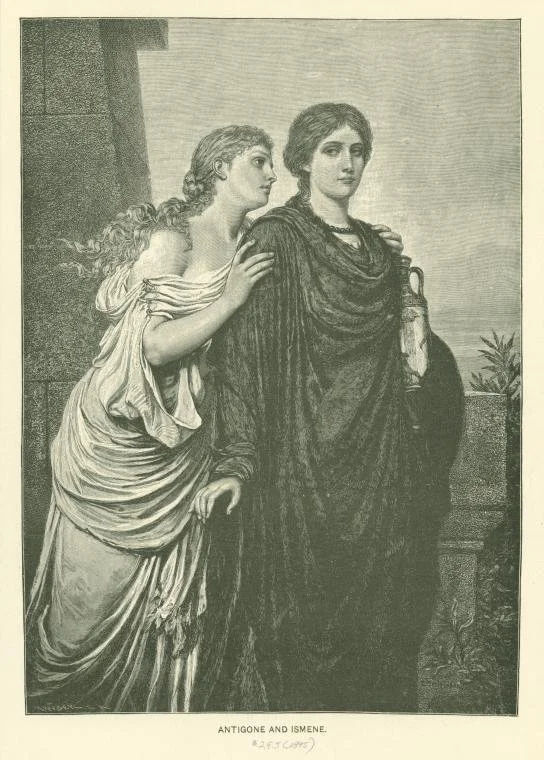
Antigone and Ismene by Emil Teschendorff (1892) from the New York Public Library
-
Next, the Chorus of Theban Elders sing a lament about Antigone’s bold defiance of Creon’s law. They seem shocked by her willingness to challenge the king’s authority — but also at the ruckus about the seemingly small act of spreading dust over the body of her brother, Polynices.
This reflection spurs the chorus to reflect more deeply on the fragile nature of human affairs. On the surface, it may seem almost insignificant to scatter dust on a body, but in the context of defying the states’s authority, the act becomes bolder and more contentious. It seems to have moral consequences.
At the same time, the chorus is keenly aware of the reach of divine justice: none can escape it. They foreshadow that only disaster can come from Creon’s unwillingness to compromise, and Antigone’s refusal to obey him.
Antigone’s act of defiance is like a spark that starts a great fire. However noble her intentions were, it is the catalyst for the impending downfall that will rock the future of Thebes. The chorus knows that the tragedy will unfold with unstoppable force.
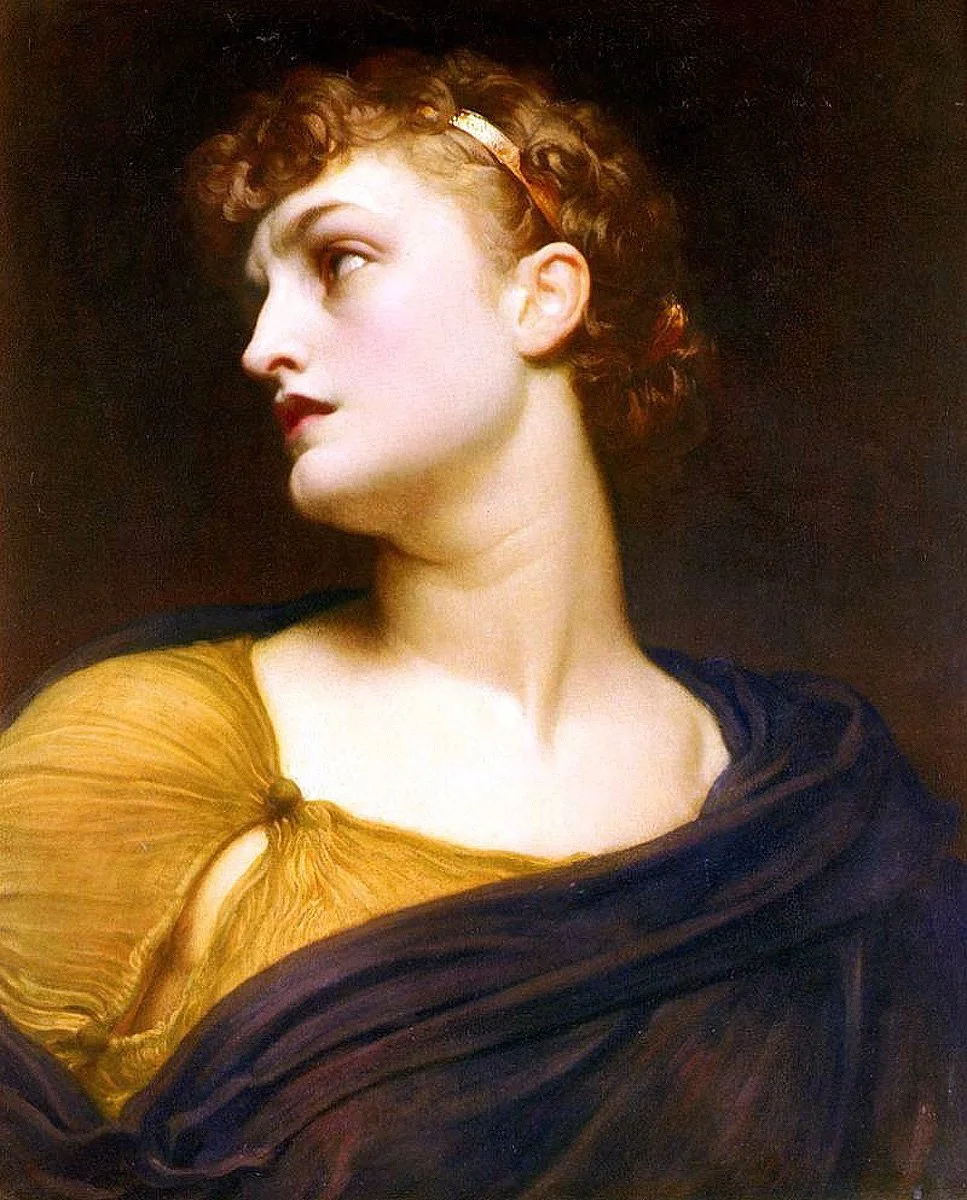
Antigone by Frederic Leighton (1882)
-
Haemon, Creon’s son, makes a passionate plea for Antigone’s life. He speaks with respect and humility to his father, recognizing Creon’s authority and wisdom. But he doesn’t hesitate to argue that the law of the land should be tempered with mercy and understanding. He believes that a ruler who listens to the voice of the people and takes counsel is a wise leader. The people of Thebes aren’t happy with Creon’s decree: they find Antigone’s punishment harsh and unjust. Haemon pleads that Creon be compassionate: he even points out that the gods favor burial rites for the dead and that Antigone acted out of duty to her (i.e., their) family and to divine law.
But Creon cannot accept his son’s argument. He accuses Haemon of being blinded by love and weak in his judgment. Creon’s resolve to maintain order and the law of the state is unshaken. He dismisses Haemon’s argument, and insists that laws must be upheld to maintain justice and control.
Haemon, in his frustration, warns his father that his refusal to listen to reason will bring disaster. He tells Creon that he will no longer be part of a kingdom ruled by unjust authority, and in a fit of anguish, he storms off, leaving his father alone in his inflexibility.
If his fiancé dies, we realize, Haemon will likely die alongside her. This pivotal exchange highlights the clash between personal loyalty and political duty, and sets the stage for the tragic consequences that will follow. And it ups the stakes for Creon, now at risk of losing his only heir.

Antigone Sentenced to Death by Creon by Giuseppe Diottii (1845)
-
After Haemon confronts Creon, the Chorus of Theban Elders reflects on how love is one of the most powerful forces in the world.
They sing of how love conquers all battles: it even seems to transcend reason and law. They acknowledge love as a force of both creation and destruction. It can bind people together, or lead them to their downfall.
They also point out the tension between the individual’s duty to abide by divine law and the rule of human law, a major theme of the play.
But, lurking beneath the surface, might there be another lesson? The Chorus here offers a cautionary reminder that love can overwhelm even the strongest individuals. Antigone’s love for her brother, Polynices, has led her to defy the state, and she now faces tragic consequences.
The key lesson here is that as much as Antigone’s motivations are noble, we need to learn to balance our passions and convictions so they don’t cause us to stray from wisdom.
Antigone is as unflinching as Creon and therein lies her tragic flaw. Her greatest strength, taken to the extreme, turns against her. She is blinded to any other truth or path forward.
We need wisdom and foresight to prevent harm, so we can discern when to act and when to temper our inclinations. A very Aristotelian undercurrent indeed.

Antigone sentenced to death (anonymous)
-
With one foot in the grave, Antigone reflects on her actions and their consequences. She has no regrets, even though burying Polynices cost her everything in this mortal life. For her, honoring the divine laws is so much more important than submitting to the corrupt mortal laws of any ruler, including Creon.
As she recognizes the inevitability of death, she accepts it with dignity. Here is a woman who remains true to her convictions and understands what it means to be driven by a higher moral duty.
What Antigone challenges us to think about here is what hill we’re literally willing to die on. How do we stay true to our values and principles, even in the midst of great adversity and personal hardship?
She doesn’t wish to be a martyr but her conviction gives her strength. She finds comfort in being aligned with what is morally right. And she remains steadfast because Justice demands it.
Sometimes, the right choices doesn’t result in personal gain, but in a deeper sense of honor and integrity.

Antigone Leads Oedipus out of Thebes by Charles François Jalabert (1842) from the Musée des Beaux Arts, Marseilles, France
-
Creon’s stubbornness grows.
Antigone has an unexpected champion in Tiresias, the infamous blind prophet who brings a warning to the king. Tiresias warns Creon that his "luck is once more on Fate's razor edge,” and he must do everything Tiresias tells him.
He reveals to Creon that the gods are displeased with his actions, especially his refusal to allow Polynices to be properly buried according to divine law. He warns Creon that defying the will of the gods will not stand: the king has invited divine retribution upon himself and the state of Thebes. He must turn back from such foolishness, or risk losing everything.
In his pride, Creon dismisses the prophecy and accuses Tiresias of having accepted a bribe. But Tiresias holds firm: the gods cannot be ignored, and he warns that if Creon does not amend his ways, he will suffer a great loss. The greatest loss of which Creon can conceive, in fact: the death of his own son.
The grim prediction shakes Creon to the core, and he begins to fear the consequences of his actions. Tiresias also tells the king that his actions have made the state sick—in other words, he is failing his people as a ruler.
After Tiresias leaves, Creon asks the leader of the chorus for advice. The chorus tells him to do as he has been told: bury Polynices and free Antigone. Reluctantly, Creon agrees to the plan. Suspense builds: Can tragedy be averted?
Tiresias reminds Creon that we need people to speak truth, even when it is hard and we do not wish to hear it. When counsel challenges our beliefs or positions, that’s when we need it the most.
Creon’s stubbornness and delay reminds us of the perils of pride and the inability to change course in the face of wise counsel. True wisdom is found in humility and the ability to listen. We have to learn to see through the clouds of our own emotions and beliefs—especially when others speak truth and highlight our blind spots.
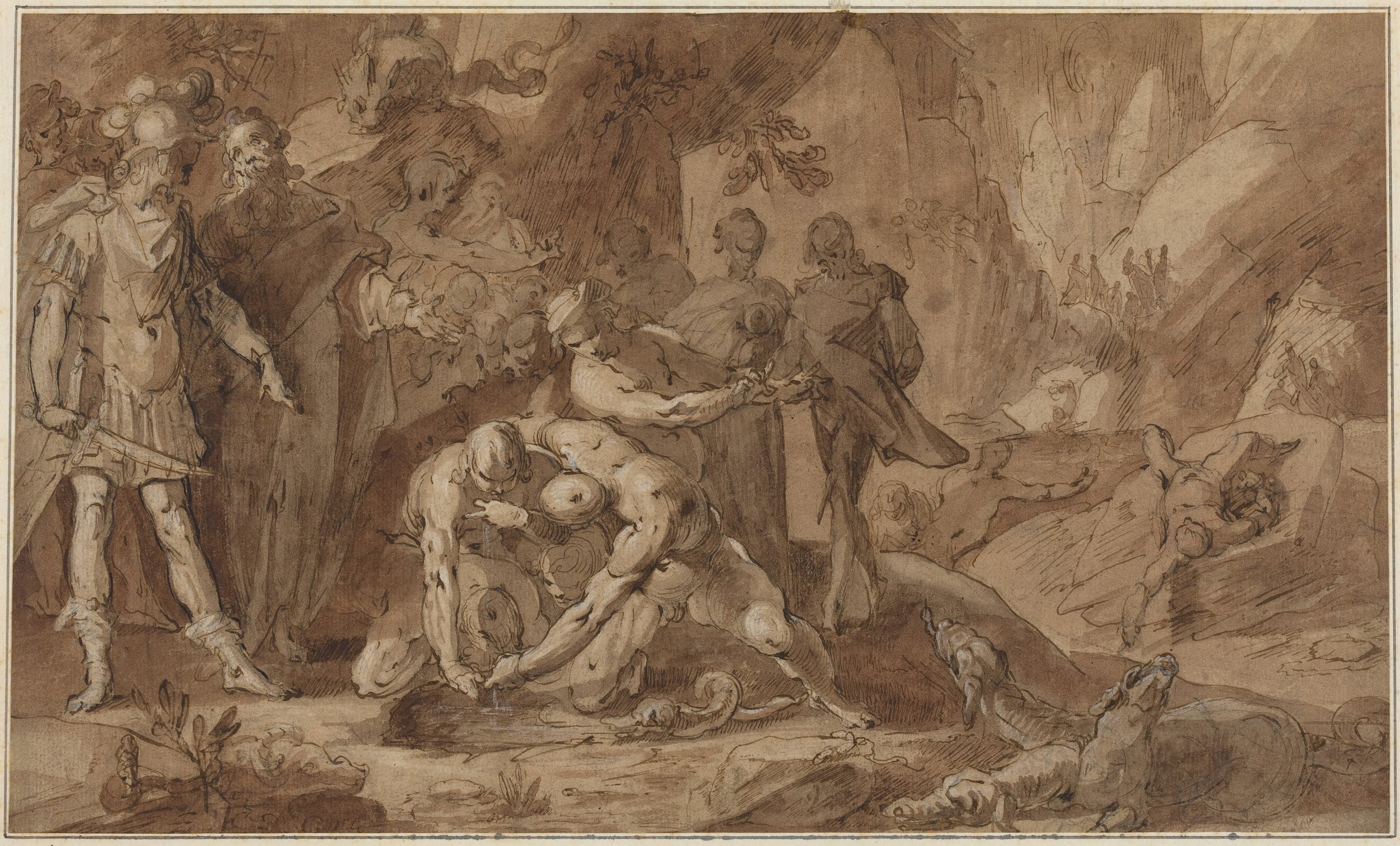
Odysseus and Teiresias by Gerrit Pietersz Sweelinck (ca. 1566-before 1612) from the National Gallery of Art